Observatory of Higher Education Innovations
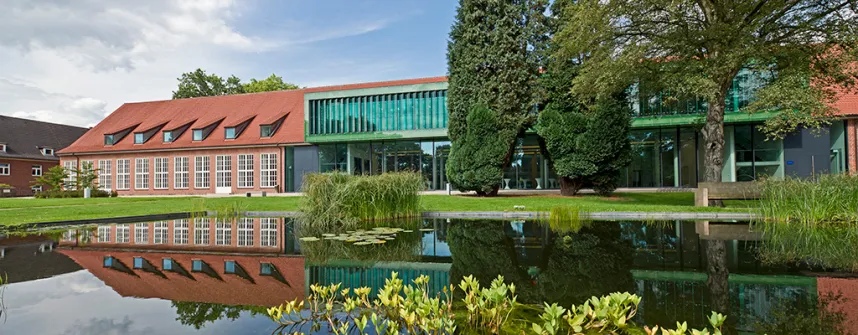

The Observatory of Higher Education Innovations was established at Constructor University in September 2022 as a research group and as a a part of the Constructor University Strategy Unit that supports the President and the Executive Board in the analysis of the competitive positioning of our institution and finding best practices worldwide.
The main functions of The Observatory of HEI are:
- to collect and analyze data on innovations in higher education
- to study the transformations of higher education in specific aspects
- to advise on strategy and challenges at Constructor University in the context of international experience
- Innovative universities
- Private higher education in Europe
- Education technologies in higher education with the focus on use of Generative AI
- Strategic planning in higher education
- Peace and constructive conflict resolution in higher education
- Role of universities in addressing the environmental challenge
- Innovative Universities Global Webinar Series: A platform where university leaders and pioneers share their experiences and strategies, promoting a global dialogue on innovation in higher education.
- Strategic Influence: Our analyses and recommendations have directly influenced the strategic direction and initiatives at Constructor University, enhancing our institution's competitive edge.
KI:HO! - Best Practices in the Use of GenAI at Universities: What Can Germany Learn from India? (2026-2028)
(Funded by BMFTR)
This project, carried out in cooperation with Prof. Dr. Christoph Lattemann (Constructor University) and Prof. Dr. Sebastian Vollmer (University of Göttingen), aims to identify best practices for the application of GenAI at universities. Using an Action Design Research approach, the project involves the iterative development, testing, and evaluation of prototypical GenAI solutions in real-world institutional settings. Our project team, led by Prof. Dr. Isak Frumin, is responsible for the international comparison and evaluation of best practices in GenAI regulation, acceptance, and use, including a comparative analysis of “managed” GenAI adoption driven by university administration and “organic” adoption by students and academic staff in Germany and India. The project also contributes to the assessment of best practices at German universities and supports knowledge exchange, international cooperation, and the dissemination of results across academia, policy, and society.
Higher Education for Openness, Peace, and Empathy (2025-2028)
(Co-funded by the EU through the Erasmus+)
This project strengthens the capacity of Israeli higher education institutions to act as hubs for peace education, constructive conflict resolution (CCR), and social cohesion. HOPE (Higher Education for Openness, Peace & Empathy) brings together universities in Israel, Germany, and Greece to support the development of curricula, pedagogical expertise, and institutional practices that foster dialogue, CCR skills, and intercultural understanding. Strategically, HOPE enhances the third mission of universities and contributes a transferable model for how higher education can support democratic resilience and coexistence in conflict-affected contexts.
Foresight of Digital Skills in Azerbaijan (2024)
(Funded by Innovation and Digital Development Agency of Azerbaijan)
Analysis of the trends in the digital skills demand and supply in Azerbaijan. Development of the policy recommendations for the government and skills providers.
Private Higher Education in Germany (2024-2025)
Combining Europe-wide data with deep dives into German universities, this project explores how private institutions are driving growth, absorbing new student demand, and pioneering digital and AI-enabled models at a moment when public systems are under demographic and financial strain. It reframes private higher education not as a fringe sector, but as a key engine of systemlevel change in the digital age.
Green Deal for Central Asian Universities (2024-2027)
(Co-funded by EU through Erasmus+ program)
This project brings together universities in Central Asia and Europe to strengthen higher education’s capacity to drive the green transition. Through new curricula, flexible learning pathways, and sustained cooperation with public institutions, businesses, and civil society, it equips universities to develop practical skills in sustainability, ESG, and regenerative development aligned with the European Green Deal. Strategically, the project builds a durable regional network—including interconnected Green Deal Centers—that anchors these innovations institutionally and positions universities as long-term actors in ecological, economic, and societal transformation.
How universities navigate generative AI (2024 - 2026)
This project aims to explore how universities are responding to the rapid and widespread adoption of generative AI. The discussion will focus on the interplay of three key forces: the adoption of generative AI by individual actors, institutional (university) governance, and system-level governance. It is framed by an understanding of both the transformative power of genAI development and the uniqueness of universities as organisations and higher education systems. We expect the project to contribute both to the conceptual understanding of the changes and challenges of genAI for universities and to the understanding of the evolution of higher education systems in a comparative perspective (insights from country-specific case studies (from Brazil, China, Germany, India, Kazakhstan, Russia, South Africa, Spain, Turkey, the UK and the US).
Frumin, I., Vorochkov, A., Kiryushina, M., Platonova, D., & Terentiev, E. (2026). Mapping the Generative AI Research in Higher Education: 2022–2024 Insights. Higher Education Quarterly, 80(1), https://doi.org/10.1111/hequ.70075
How AI transforms science: newcomers with AI expertise in research teams (2024 - 2026)
This project examines how genAI specialists are integrated into existing research teams and how their expertise is reshaping scientific work and team dynamics. Through interviews and observations, we will explore the role genAI plays in both scientific discovery and the broader research enterprise, from writing to project management. The study bridges AI4science with research governance and organizational studies, and contributes to academic conversations about science policy and team-based knowledge production.
- Yeliz Düskün - Strategy Unit Coordinator
- Zachary Reyna – Senior Researcher
- Vicenso Drushku – Data Analyst, Strategy Unit
- Daria Platonova – Program coordinator / Research analyst
PhD Students
- Ilya Kompasov – PhD Student
- Kreesan Pragasan Naicker – PhD Student
- Shijie Liu – PhD Student
- Linda Peter – PhD Student
Student members
- Salma Sobaii - Student Assistant
- Nana Owusu – Student Assistant